

Aegis
On Feminine Agency and the Power of Resistance

what did i see to be except myself?
i made it up
here on this bridge between
starshine and clay,
my one hand holding tight
my other hand; come celebrate
with me that everyday
something has tried to kill me
and has failed.-Lucille Clifton, “won’t you celebrate with me?”
I’m delighted to announce a new collaboration between me and the brilliant photographer Amy Wilton, which will be included in a year-long exhibition at Creative Portland in Portland, Maine (details are below).
The theme of the show is “Resistance.” It’s a concept I’ve thought a lot about during this era of political and social upheaval, and one that’s always been thorny for me. The etymology of the word “resistance” comes from resistentia, which is Medieval Latin for “military or armed physical opposition by force,” an act at odds with many of my core values.
Above all else, I believe in the necessity of loving kindness and compassion. I think we are all our best selves when our relationships—both interpersonal and communal—are predicated on empathy, vulnerability, and an ethic of care.
At the same time, I also recognize that spaces and circumstances don’t always (or even often) allow for the lived experience of those values. There are moments when we must resist—when we have to hold a boundary and say no. Sometimes, that’s because another person is behaving in ways that are damaging or unsafe. Other times, it’s because systems and governments subjugate and exploit already marginalized and socially subordinated groups. In such cases, I also believe that resistance is not only right; it’s a moral imperative.
For me, then, the question is often this: when faced with aggression or any other brand of harm, how can we resist in a way that allows us to hold both equanimity and agency in the same open palm?
I think the answer lies not in the militaristic antecedents of the term itself, but rather its use in more contemporaneous scientific principles.
In the world of physics, for instance, resistors regulate the flow of energy through a circuit, safeguarding its functionality and longevity. Resistors block excessive force, prevent signals from overwhelming components, and dissipate heat that might otherwise destroy sensitive devices. Thought about in this way, resistance is really about strategic refusal: a kind of molecular Judo that stymies anything that might interfere with a system’s integrity.
When thinking about resistance in this context, I kept returning to the figure of the female warrior: an archetype in which compassion is paired with the readiness to protect what matters. Collective mythology is filled with examples of these women, whether it’s the Norse Valkyries, the Hindu Goddess Durga, Celtic figures like Boudica and Scáthach, or even pop-culture’s Wonder Woman (always my favorite Superhero). For these figures, shields are symbols of both protection and authority. What most draws me to their stories, I think, is the idea that power can co-exist with vulnerability, that we can sometimes find our greatest strength in the calm articulation of a non-negotiable NO.
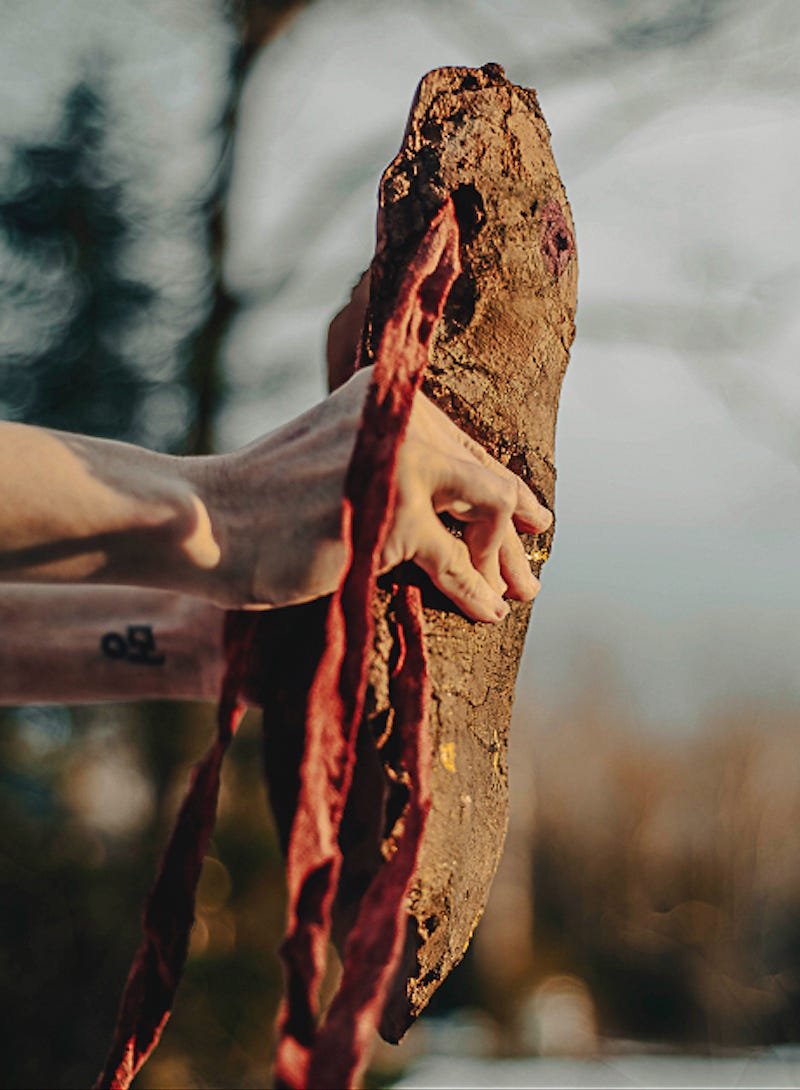
With these female warriors as my inspiration, I began to think about what I’d want from my own self-fashioned shield. I knew I wanted it to be both a second skin and a record of impact. One that celebrated, rather than hid, my gender and that also leaned into the idea of feminine power. I wanted it to be both delicate enough to reveal its process of creation and strong enough to withstand an opposing force, no matter how insidious or destructive.
To create the actual piece, I began by taking a plaster cast of my torso, which I used as a mold for clay I dug near my home. The act of harvesting wild clay is always filled with metaphor and meaning for me: it’s about marking tides and layers of history, about knowing the ground that supports me. As I’ve written before, the literal clay that comes from this ground is finicky and often frustrating to work with. Because it is so very prone to cracking, I fortified the clay for this project with hair and the pulverized pieces of other pots, both of which create greater stability and form. Once the breast plate was dried, I pit-fired it in a pile of compost and brush from my property. The process left the surface darkened by smoke and flame, marked with fissures created by heat and chance. That seemed fitting for a both a literal and figurative shield as well.
As much as I love the physicality of the final piece, it’s Amy’s photographs of the breast plate that really move me.
We first met about fifteen years ago, when she shot a series of author photos for a forthcoming book. I was newly divorced, feeling frail in heart and body, and about to make a terrifying leap from the security of academia into a very uncertain future as a full-time writer. Somehow, Amy saw beyond all of that. She captured a calm assuredness I didn’t even know I had.
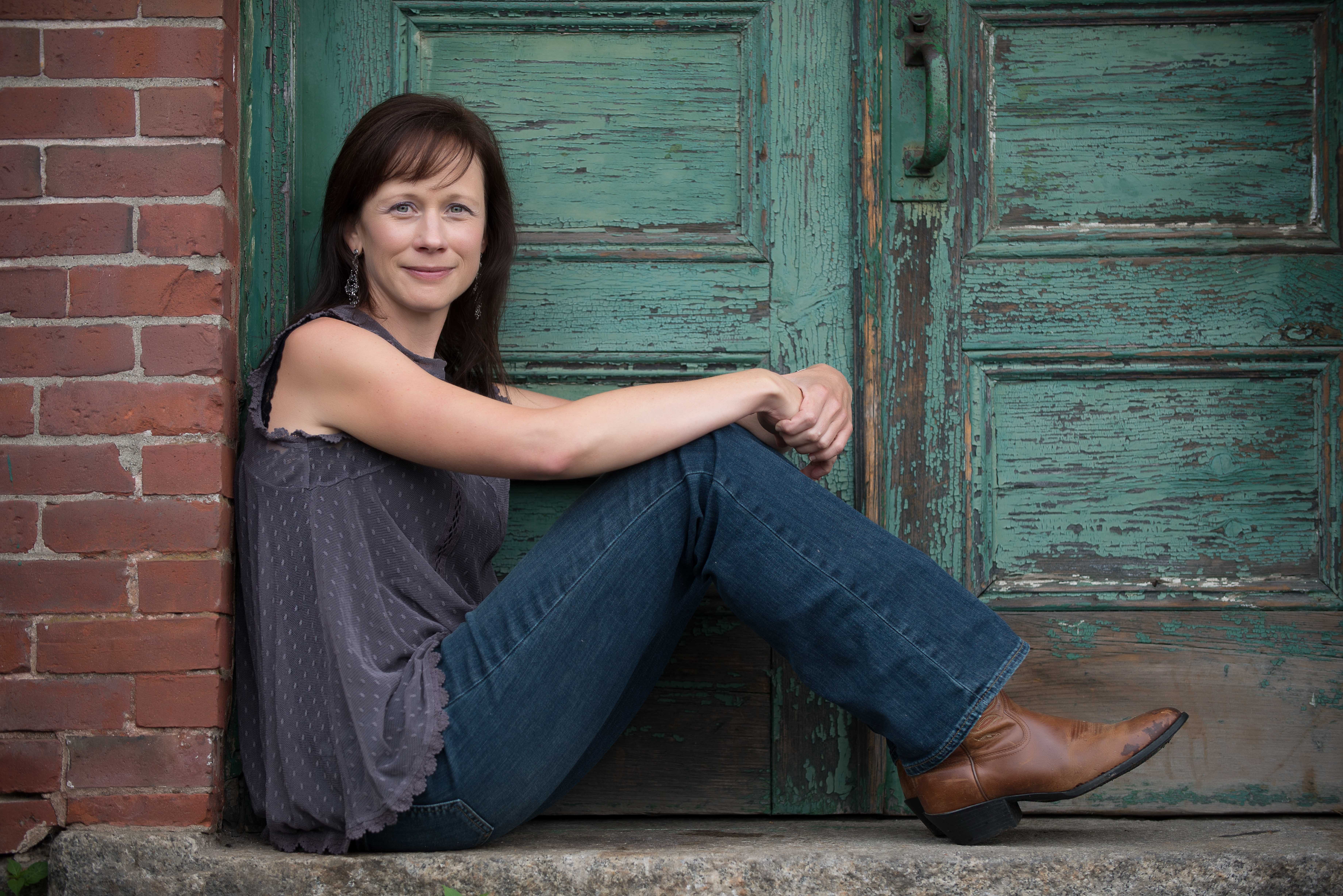
Since becoming friends, I’ve seen her do this again and again. Amy has a remarkable ability to create the conditions where someone relaxes into themselves. Her portraits aren’t about staged polish; instead, they are about the moment when a person’s real presence begins to show. She has keen vision and an ability to make meaning wherever she goes—a powerful form of resistance onto its own.
And that’s exactly what happened when she photographed the breast plate.
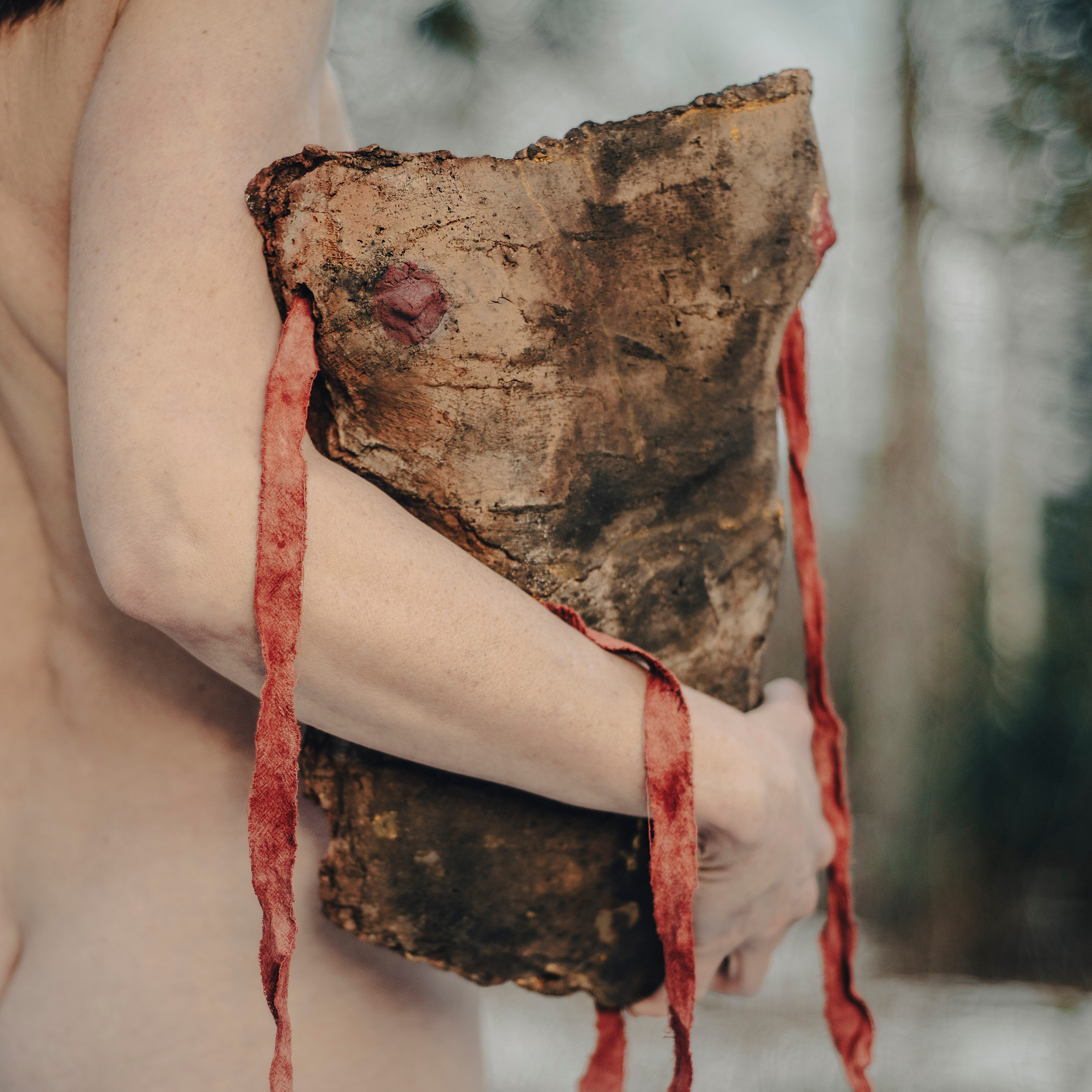
On a chilly evening when snow still covered much of the ground, we shot dozens of photos of me and the shield. Along the way, one of us got naked. The one with the camera had the good sense to keep on her winter coat and boots. Through it all, we talked about the long process that healing can take, about boundaries, about the reflexive and intuitive ways a body says stop. We talked about the redemptive power of creation, about the importance of community and collaboration. We laughed a lot, both at ourselves and the ways life can feel absurd.
In the end, the photo we selected for the show is one we call Aegis, a nod to the Greek Goddess Athena, a symbol of wisdom, strategy, and protection.
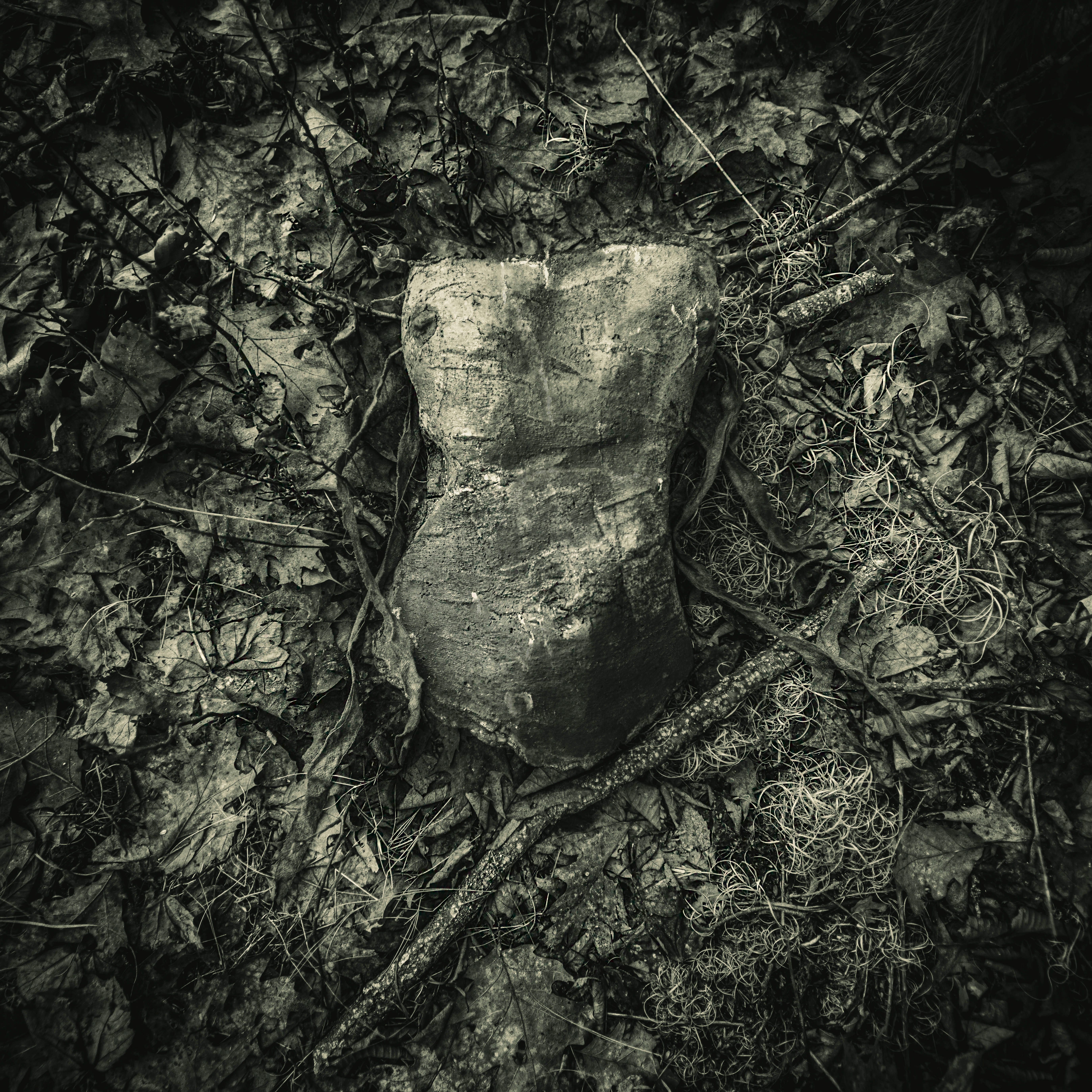
I love the quiet, contemplative nature of Amy’s final image. It seems to suggest that a shield exists not to strike, but instead, to hold. To create a space where life can continue behind and around it. If the image suggests a nest, that feels right, too. Nests are not monuments; they are temporary refuges built from whatever materials are close at hand—twig, hair, thread, scraps of the surrounding world. They are places of protection and beginning. The breastplate grew from the same principle: earth from my home ground, fragments of other vessels, the literal traces of the body it was meant to protect. It is a reminder that the things that shield us are often the things we build ourselves, slowly and imperfectly, from the lives we have lived.
And maybe that is the truest form of resistance I know. Not domination, not spectacle, but the steady practice of knowing where we stand, what we will carry forward, and what we will refuse to allow through. It’s the truest nature of a warrior, and one that I believe lives in all of us, alongside a heart big and brave enough to love the world and its inhabitants, both in battle and in peace.
-Kate
RESISTANCE begins with a reception for friends and family on April 30, followed by a public opening on May 1. The Creative Portland Gallery is located at 84 Free Street, Portland, ME. Amy and I would both be delighted if you could join us there!
Regretfully (mostly) I will still be in Ireland for the opening, but looking forward to seeing Aegis in person when I get back.