

Obvara
On cultivating organic growth and new beginnings

I loved you even before you said
Nothing breaks more slowly, more silently, than bread.
With my blood pouring out as a fine, dry flour
let me confess before I expire.
There on the counter, in that vase
fresh and pink is the corsage I was keeping for our dance.
-Darcie Dennigan, “In the Bakery”
When I was growing up, spring brought with it the indelible scent of sweet, leavened bread.
My paternal grandfather and his family immigrated from what is now Croatia, and they brought with them Slavic recipes dating back generations: cabbage rolls stuffed with meat and rice, peas simmered in tomatoes and bacon, sauerkraut fermented for weeks in old ceramic crocks. But it was the raisin bread I most coveted.
Every Easter, my great aunt Vera would make her version of paska, a traditional Lenten sweetbread. Variations of these yeasted Easter loaves appear across the Slavic world—sweet, enriched breads prepared in early spring after the long restraint of Lent. They mark the return of the sun, the promise of renewal, and the quiet assurance that life, for all its fragility, has a way of gathering itself again—no matter the darkness and cold it has endured.
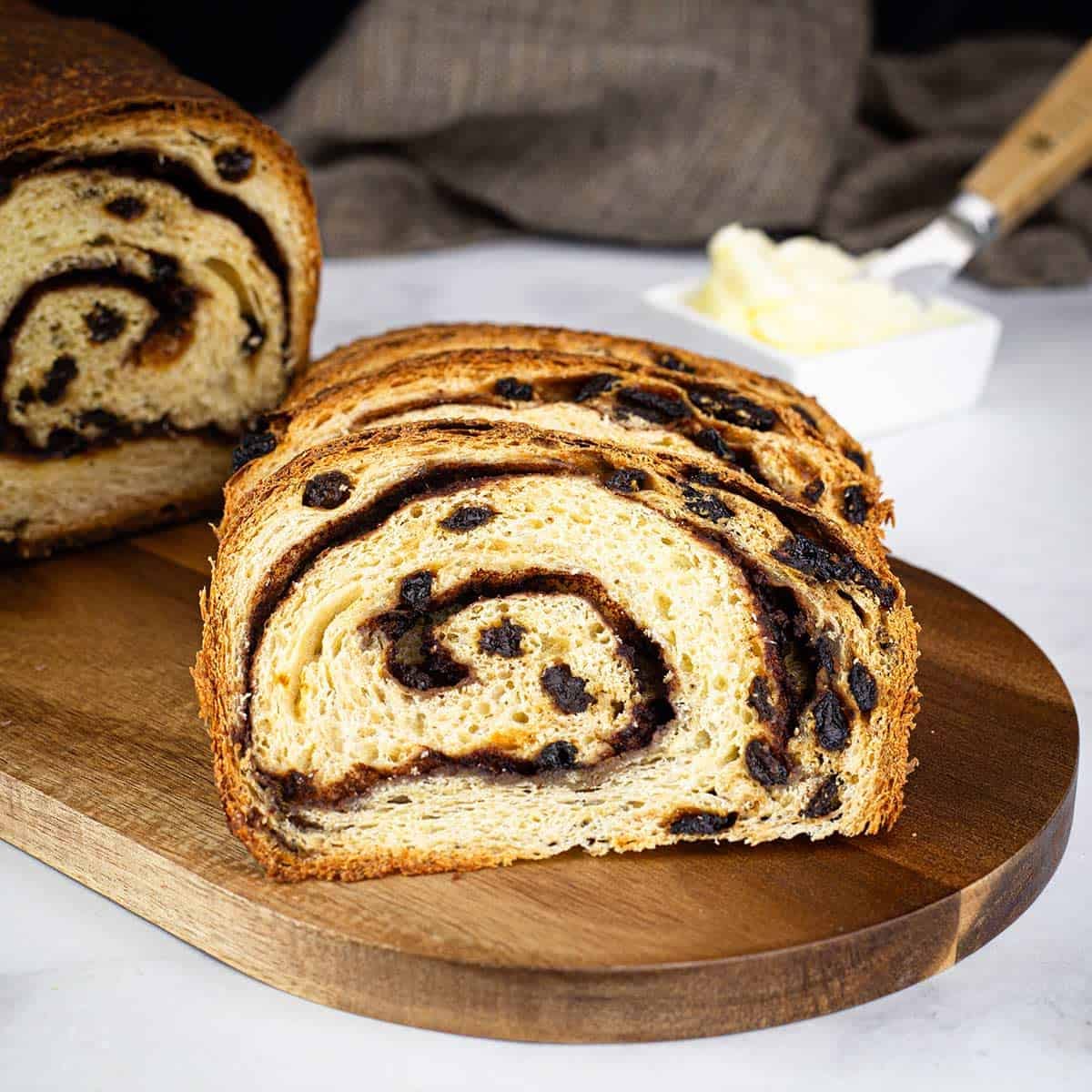
Vera’s bread always began with blooms of yeast, fed by milk and the starch of white potatoes. She’d add butter and flour, then handfuls of raisins. After the dough had risen and been punched down and risen again, she’d roll it out on her old wooden countertop, then sprinkle it with the dark, heady spices that gave the final loaf its characteristic swirl. Each act was imbued with meaning: the raisins, a nod to the sweetness of a life resurrected; the swirl a symbol of the eternal, unbroken cycle of the world as we know it
.
Like most of her recipes, Vera never wrote this one down, which meant it disappeared with her sudden death. Even though she was well into her 70s by then, she was so vibrant, so full of joie de vivre, that no one had believed her death was even possible, let alone that the opportunity to learn her baking secrets was finite. For years after her passing, I experimented with recipes I found in traditional cookbooks and web searches, but I could never recreate the rich, brioche-like loaf that had been the mainstay of our family celebration.
This Lenten season, I’ve found myself returning again and again to these ideas of nourishment, of intergenerational inheritance, of permanence and rebirth.
And at the heart of it all, it turns out, is yeast.
A single-celled organism belonging to the fungus kingdom, yeast emerged on this planet hundreds of millions of years ago. The species most familiar to us, Saccharomyces cerevisiae, transforms sugars into carbon dioxide and alcohol through fermentation—a process that gives bread its lift and alcoholic drinks their potency. And here is my very favorite fact about yeast: under stress, yeast cells do not remain solitary. They bond. They cluster together into small communities that help them survive difficult conditions. Individually they are fragile; together they create lift.
In breadmaking, this simple cycle of bonding, feeding, and reproduction releases carbon dioxide that forms pockets of air in the dough. When the loaf bakes, the yeast dies and those pockets set, leaving behind the soft, airy structure that makes bread feel alive even after the fire.
Turns out, the very same process was used by my ancestors to seal their earthenware vessels as well. During the sixth and seventh centuries, when Slavic communities moved into the regions that are now Croatia and Slovenia, they brought with them a tradition of low-fired earthenware pottery—simple cooking vessels shaped by hand and fired in modest kilns or open pits. These pots never fully vitrified. Instead, and like the wild clay I use today, they remained porous even after firing.
In some instances, those pores were imperative. Earthenware vessels helped sustain the fermented foods that anchored early Eastern European agrarian life: sourdough breads, sauerkraut, along with mead and beer-like drinks. Yeasts and bacteria settled into the microscopic spaces of clay, working their alchemy on the food added there. In that regard, it was the pots themselves that carried these invisible cultures forward from one meal to the next.
But that same porosity not only makes a vessel fragile; it could also make it unsuitable for safely holding food: a palimpsest for both flavors and potentially harmful bacteria.
Enter a Raku-like method, known in Eastern Europe as obvara, which utilizes the same sponge and fermentation process that served as the basis of my aunt’s bread.
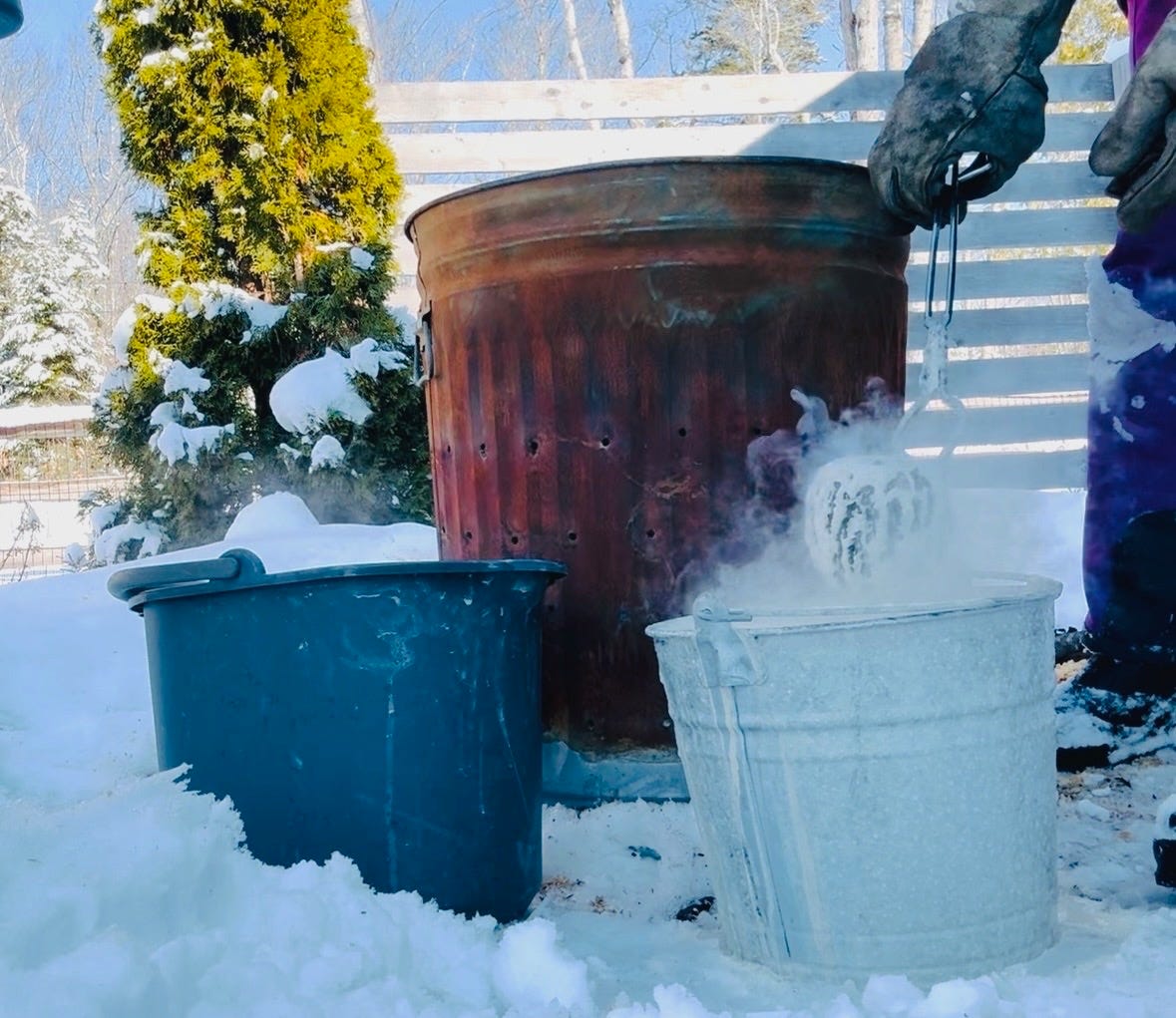
The obvara method is both simple and severe. A pot emerges from the kiln still blazing with heat. It is plunged immediately into a fermented bath made from flour, yeast, and water. Sugars scorch on contact with the clay, causing dark patterns to bloom across the surface. The pot is then submerged in cold water to arrest the burn: a perilous shift in temperature known as thermal shock, which can easily crack or even shatter a vessel. Those that survive the process are not only sealed as if they were glazed; they also have the added benefit of holding in them the unmistakable scent of sweet, toasted bread
.
The history of obvara is uncertain. Anthropologists know the technique began across parts of Eastern Europe, particularly in Baltic and Slavic regions, but its exact origins are lost. Like many traditional practices, it traveled quietly—from one set of hands to another—and all but died long before anyone thought to record it.
For me, that meant a lot of internet searches, looking for recipes and ratios. Most that I found favored a sweet sponge not unlike my aunt’s bread. For my own obvara experiment, then, I mixed yeast and honey, warm water and low gluten flour in a large metal pail, then left it all in my shower to foam and froth for three days.
By the third day, my house smelled amazing, albeit a little boozy from the yeast’s metabolizing action.
On that third day, I loaded wares into a trashcan kiln and stoked as hot a fire as I could muster. For the sponge to seal the clay, the pots themselves have to be extremely hot – upwards of 1650 F – so that the yeast mixture caramelizes on contact.
When I lowered my first pot into the fermenting mixture, a cloud steam surged upward. The surface of the clay darkened and crackled. And in the warm, grainy smell rising from the bucket, I suddenly recognized something familiar.
It smelled like my aunt’s kitchen.
The connection was both simple and profound: flour, yeast, heat. The same humble ingredients that once filled her Easter bread were now meeting the surface of a bowl that might one day hold other traditions. Nourishment. And, remarkably, my otherwise persnickety local clay withstood the dramatic temperature changes without cracking, proving that even something that appears fragile at first glance has integrity and strength when pushed to a breaking point.
This, like so many of my new revelations surrounding clay and its practitioners, felt bittersweet, particularly during this particular season.
Lent is a time that asks people to sit with absence—with restraint, with uncertainty, with the quiet knowledge that something has been lost or broken. Easter follows with its language of renewal. But renewal rarely restores things exactly as they were.
A recipe disappears with the person who carried it. The precise origin of a craft fades from memory. What remains are fragments: a technique here, a scent there, a half-remembered process passed down through hands rather than words.
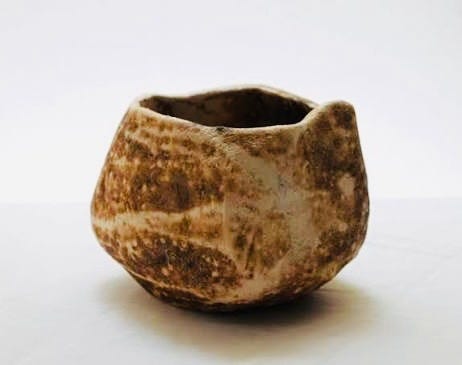
This year, standing outside with a pair of tongs and a bucket of ferment, I watched wares emerge from the bath patterned like a wood-fired boule. A week later, these pots still smell faintly of sweet toast. They are both complete and not, marked by a process whose full narrative has been lost to time.
That is so often the case. Life conspires, or at least moves at a pace, that prevents us from fully metabolizing a story, a tradition, an experience, or even a relationship. It can seem as if all is irrevocably lost. However, sometimes (and if we look and desire with our whole hearts) enough of the core elements remain for us to reconstruct and repair.
That alone can feel like an act of immense bravery. But it’s also one I whole heartedly believe in. So often, loss and reclamation are two sides of a very complicated coin.
Although I still feel a great deal of regret, I have made peace with the fact that I will probably never replicate my aunt’s Easter raisin bread. That pains, me of course. And it’s a powerful reminder of just how important it is to shore up what we cherish while there is still the opportunity. Among my life’s regrets (which sometimes feel myriad), I wish I had taken that time while Vera was still alive, apprenticing myself to her and the history of our family’s foodways.
Although she was never a ceramicist herself—nor were any of my other immediate ancestors, so far as I know—I find a kind of solace in the idea that, each time I practice my own version of obvara, I am connecting in some small way to what used to be, to the heritage that fed and held my people generations ago.
Across centuries, these techniques continue to meet each other in quiet yet important ways. Something dense becomes lighter. Something fragile becomes durable. Something that seemed forever lost leaves just enough trace for another attempt.
Perhaps that is what rebirth truly looks like—not a perfect recovery of what once existed, but the patient reassembly of its ingredients, and the recognition that a new form is still available to us.
Yeast gathers.
Dough rises.
Fire transforms.
And somewhere between memory and experiment, something familiar lifts again.
Blessed Ostara,
-Kate
PS- Friends, I’m delighted to announce that several of my earthenware bowls have been included in the New England Wood Firing Conference’s spring show. Entitled, “The Role of the Bowl,” this show features twelve ceramicists working in the wood fired tradition. The opening reception is on Saturday, 14 March. An online gallery and store will be available at the NEWFC site. Proceeds from the event will support the NEWFC scholarship program. I hope you’ll check it out. And thanks to each and every one of you for your support on my journey to the show – and beyond.
Beautiful piece, Kate. And that bowl is stunning! Abraços